And Now… How Do We Think About Re-entry?

It’s spring. We can feel the changing, evolving season. Light that lasts longer. New growth appearing. A taste of warmer days to come. People venturing out of hibernation.
It’s been a long winter, a long year, and we’ve become accustomed to the many ways in which we’ve been separated from one another. Many of us are wondering what this season of re-entry–the emerging from separation–will look like. There’s a feeling of uncertainty, a forgetting of how everyday relationship with the outside world is done. Used to be done. Should be done. Can be done.
Some of us feel the questions more intensely than others. Instead of embracing the new freedom, we look at it with a raised eyebrow. Our habits of caution outweigh our impulse to engage. That can lead us to wonder in a self-critical way–about ourselves, our resilience, our ability to adapt.
We know that distressing situations can trigger our feelings of anxiety and depression. When this happens, we do well to remind ourselves of strategies that can help manage these feelings. We may have learned some of them through Cognitive Behavioral Therapy and the practice of Mindfulness. While they’re simple skills, they’re not easy to maintain when we’re feeling stressed. Our efforts, however, can be rewarding.
Here is a reminder of some of those useful strategies:
- Stay in the present–don’t ruminate about the past or try to predict the future
- Focus on what you can control and set aside what you cannot
- Appreciate those things that are going well
Maintain healthy habits of eating, sleeping and exercising - Seek out pleasurable activities and meaningful connection with others
- Extend an attitude of generosity, both to yourself and to others
It seems fortuitous that our emerging from this highly restrictive year of the pandemic coincides with our calendar’s emergence from winter into spring. Access to vaccines and lower numbers of serious illness and death from the virus are allowing us to move about more freely. Sunny days are inviting us to come outdoors, shedding our raincoats and boots and woolen scarves.
So, is there a way to step into this re-entry, this emerging from separation into reconnection, with lightness, the spirit of spring? Can we bring what we’ve learned in this past year, about ourselves and others and reality itself, to a clearer and more compassionate understanding of what life is about? Will our inner conversations and our relationships with others thrive in this warmer climate? Will our sense of gratitude and hope speak to our experiences of loss and grief? Will we agree to move forward with a smile – one that may still at times be hidden by the masks we agree to wear but will surely be visible in our eyes.
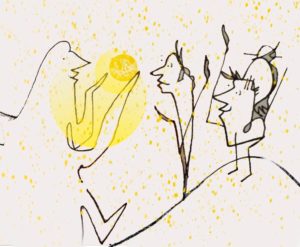
 These days we are all walking on water. Beneath us, supporting us, we experience not the solid ground of our once familiar lives—predictable routines, reliable institutions, and in-person engagement—but the deeply disturbing uncertainties, the chaos of this ongoing pandemic. Or worse. Some have experienced the disease firsthand, some have lost family or friends, some have lost businesses, jobs, homes, savings. Struggling to survive, fearing to go under completely, we are walking on water.
 Dr. Heather Macdonald joins our clinical staff this spring, bringing with her a wealth of experience and depth of training. We are particularly excited to welcome her to our psychological testing and assessment program. Heather’s professional background includes working with young children, adolescents and adults in a variety of settings with a wide range of identified concerns. A licensed clinical psychologist since 2010, she has experience working with neurodevelopmental challenges, specific learning differences, complex developmental trauma, ADHD (in adults and children), and mood issues.
 What would it be like for you to go 72 hours without alcohol? As part of Alcohol Awareness Month, the National Council on Addiction and Drug Dependence (NCADD) has invited all Americans to abstain from alcohol the first weekend in April (5th-7th). Taking a break from alcohol can be a great way to explore what role it plays in your life, even if you would not identify as someone who struggles with alcohol use.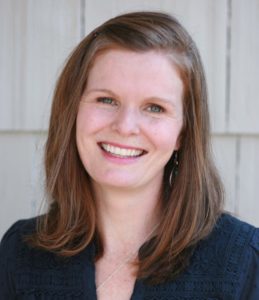
 Once upon a time, when one of my sons was an exchange student in Austria, this happened: